





Explore the cutting-edge range of additive manufacturing furnaces at Carbolite, including advanced systems for both debinding and sintering. Carbolite provides the innovative solutions you need to elevate your additive manufacturing to the next level.
- Temperatura maximă: 400 - 700 °C
- Volum:: de la 28 până la 1000 litri
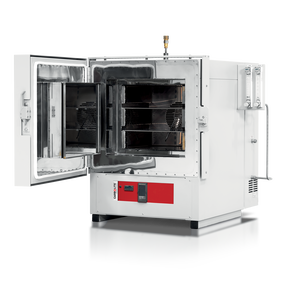
- Temperatura maximă: 1150 °C
- Volume: 56 până la 245 de litri
- Retortă metalică pentru atmosferă controlată
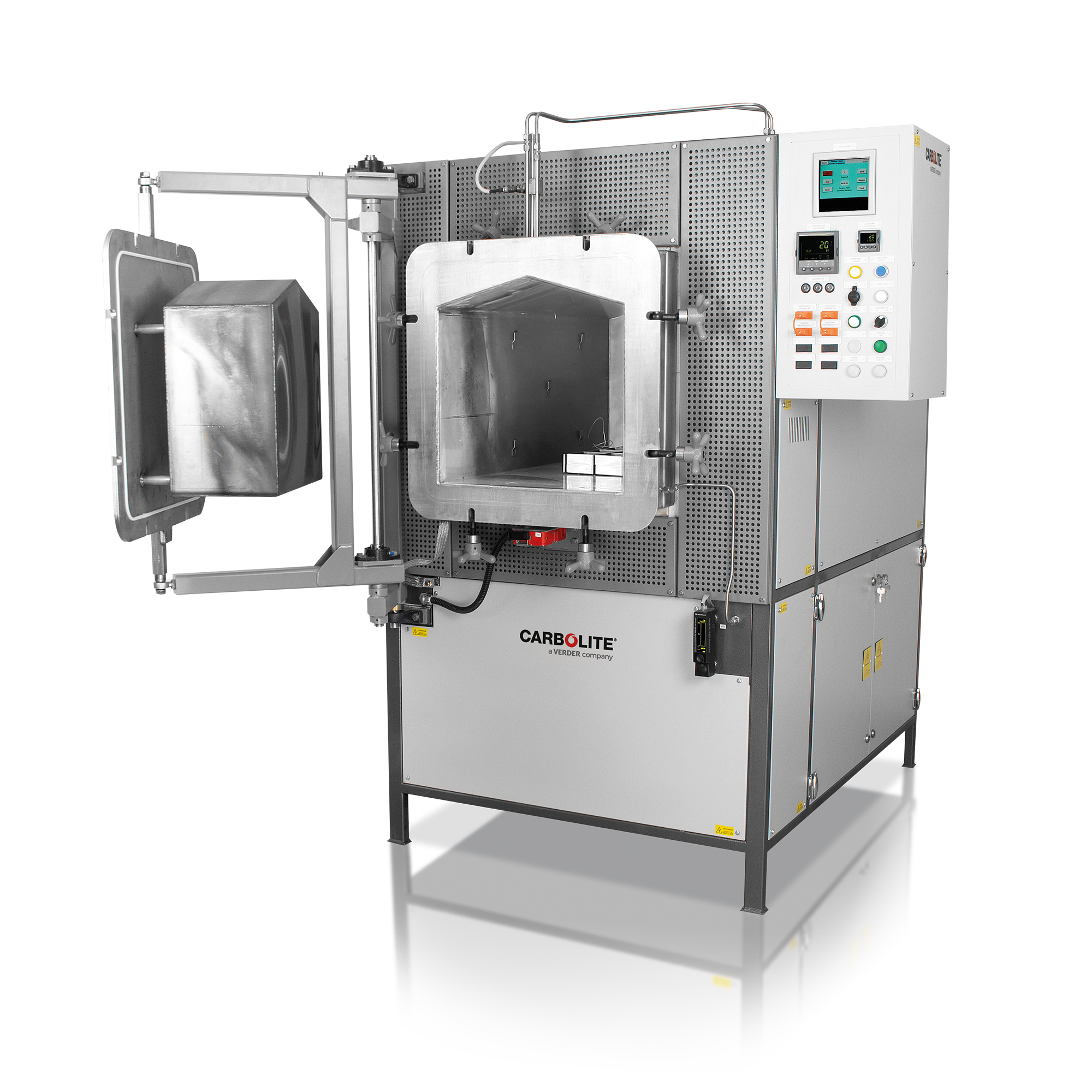
- Temperatura maximă: 1050 °C
- Volum: 7,5 până la 95 de litri
- Automatic tube furnace for applications in atmospheres with highest possible purity
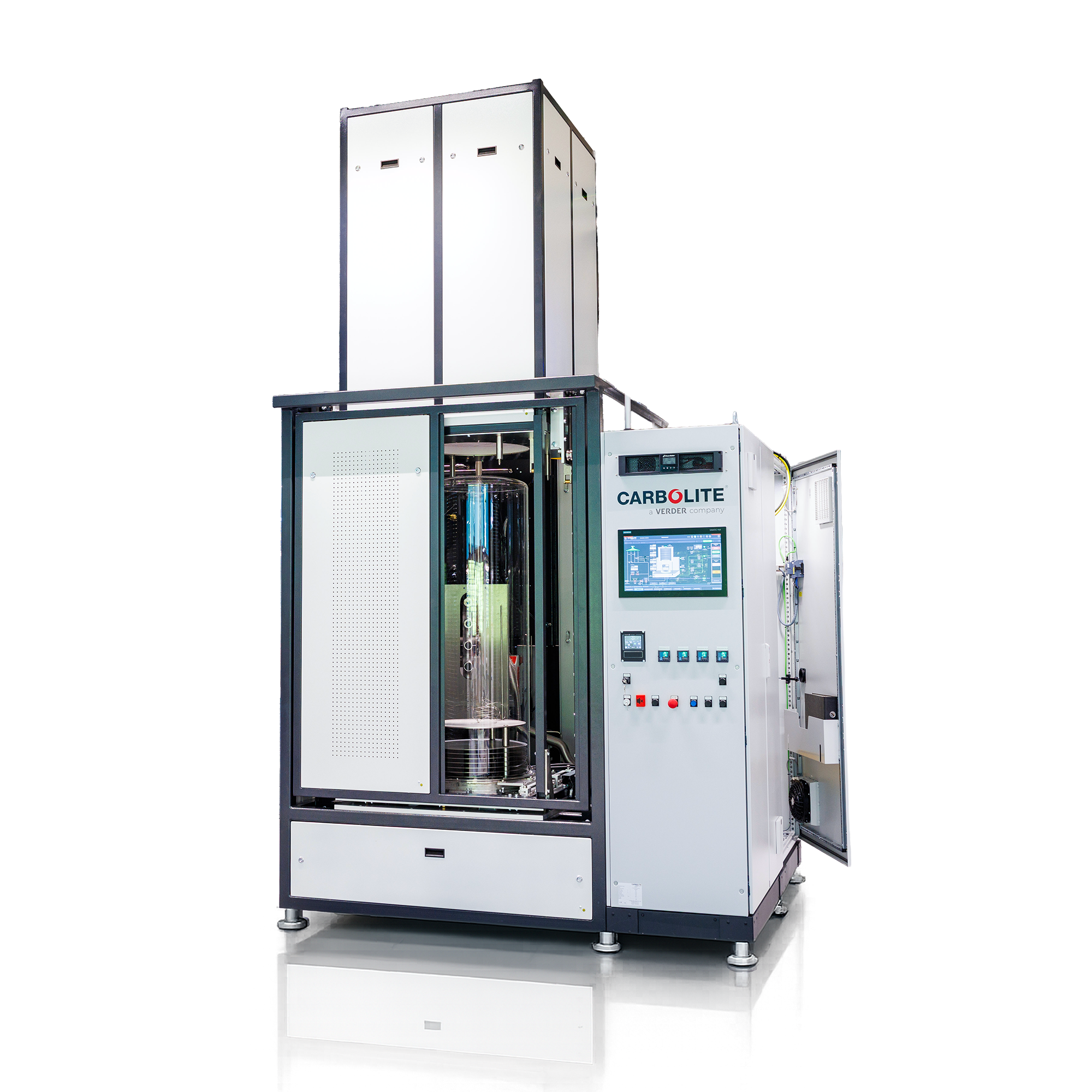
- Temperatura maximă: 1600 - 2200 °C
- Insulation material: Molybdenum or Tungsten
- Volume: 8 to 120 litres
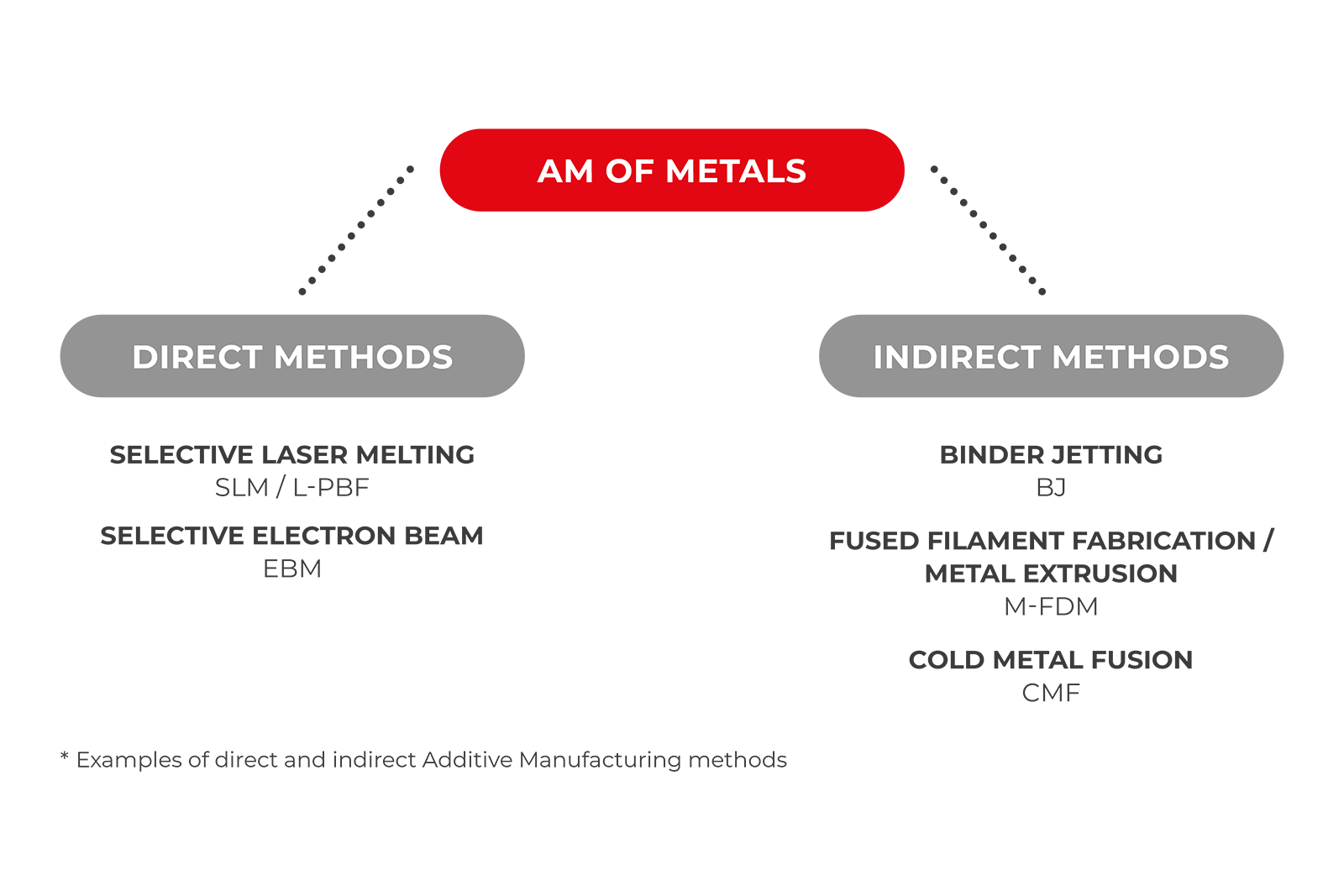
Direct and indirect Process Overview: Additive Manufacturing processes
Additive methods can be divided into two categories. Direct methods, such as SLM and EBM, are very well known and have reached a broad market acceptance in the industrial environment.
However, indirect methods have become more important in recent years. With these methods a green part is produced in the first process step, which is debinded and sintered in the second step.
| Direct AM Methods | Indirect AM Methods | |
|---|---|---|
| Method | L-PBF, EBM One-step process Direct production of components through welding processes |
BJ, CMF, M-FDM
Two-step process In the first step: Production of green parts
In the second step: Debinding and sintering of the green parts |
| Advantages |
|
|
| Disadvantages |
|
|
Furnaces & Ovens for direct additive methods
In direct additive processes high thermal stress is often generated by high heat input during the printing process. Carbolite provides customers with two suitable furnaces to achieve the best possible component properties.
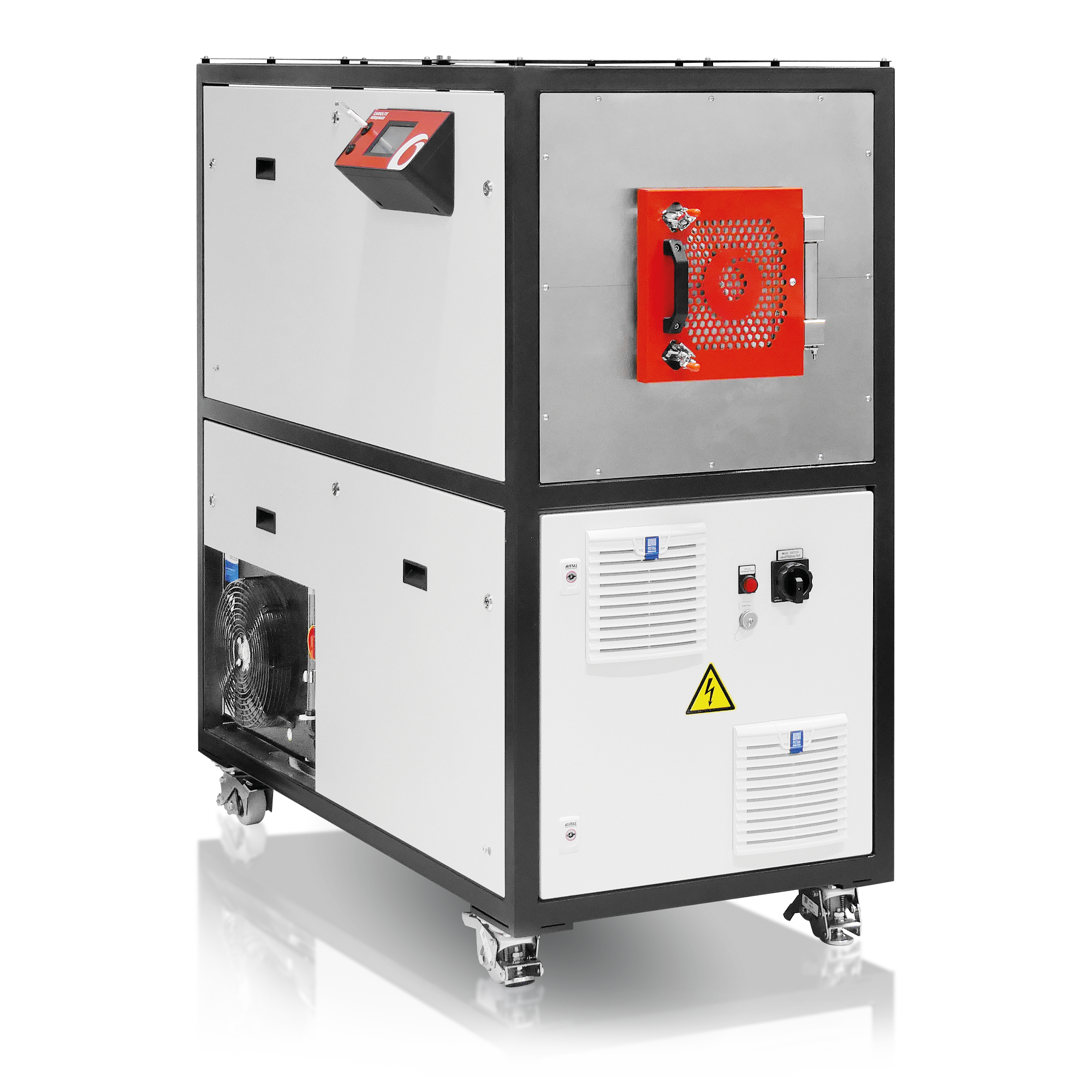
GPCMA - Modified Atmosphere Furnace
The GPCMA modified atmosphere chamber furnaces are equipped with a metallic retort to provide a heated volume with a controlled atmosphere. They are floorstanding models with a smooth action hinged door arrangement.
Available with a range of maximum temperature from 1000 °C to 1150 °C depending on the selected retort material. Retort working volumes range from 37 to 245 litres.
Oxygen levels can be reduced to 30 ppm depending on the application. Perfect for stress relieving additive manufactured components particularly those produced via DMLS. This range of furnaces can be optionally specified for compliance to AMS2750F Nadcap class 1 for aerospace applications.
| Model | Retort capacity Plate Size 350 x 250 x 250 (H x W x D) [mm] |
Retort capacity Plate Size 400 x 400 x 400 (H x W x D) [mm] |
|---|---|---|
| GPCMA/37 | 1 Plate, max height 100 mm | Not applicable |
| GPCMA/56 | 1 Plate, max height 150 mm | Not applicable |
| GPCMA/117 | 2 Plate, max height 200 mm | 1 Plate, max height 200 mm |
| GPCMA/174 | 2 Plate, max height 350 mm | 1 Plate, max height 350 mm |
| GPCMA/208 | 3 Plate, max height 350 mm | 2 Plate, max height 350 mm |
| GPCMA/245 | 4 Plate, max height 400mm | 1 Plate, max height 400mm |
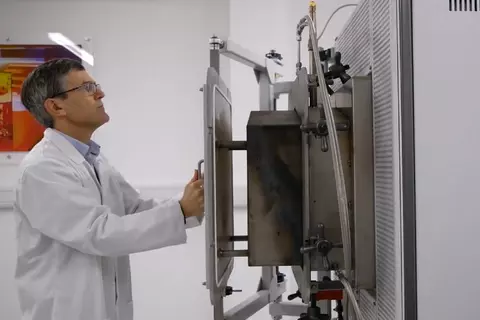
Video Produs: GPCMA - Cuptor cu atmosferă controlată
V-L - Top Hat Furnace
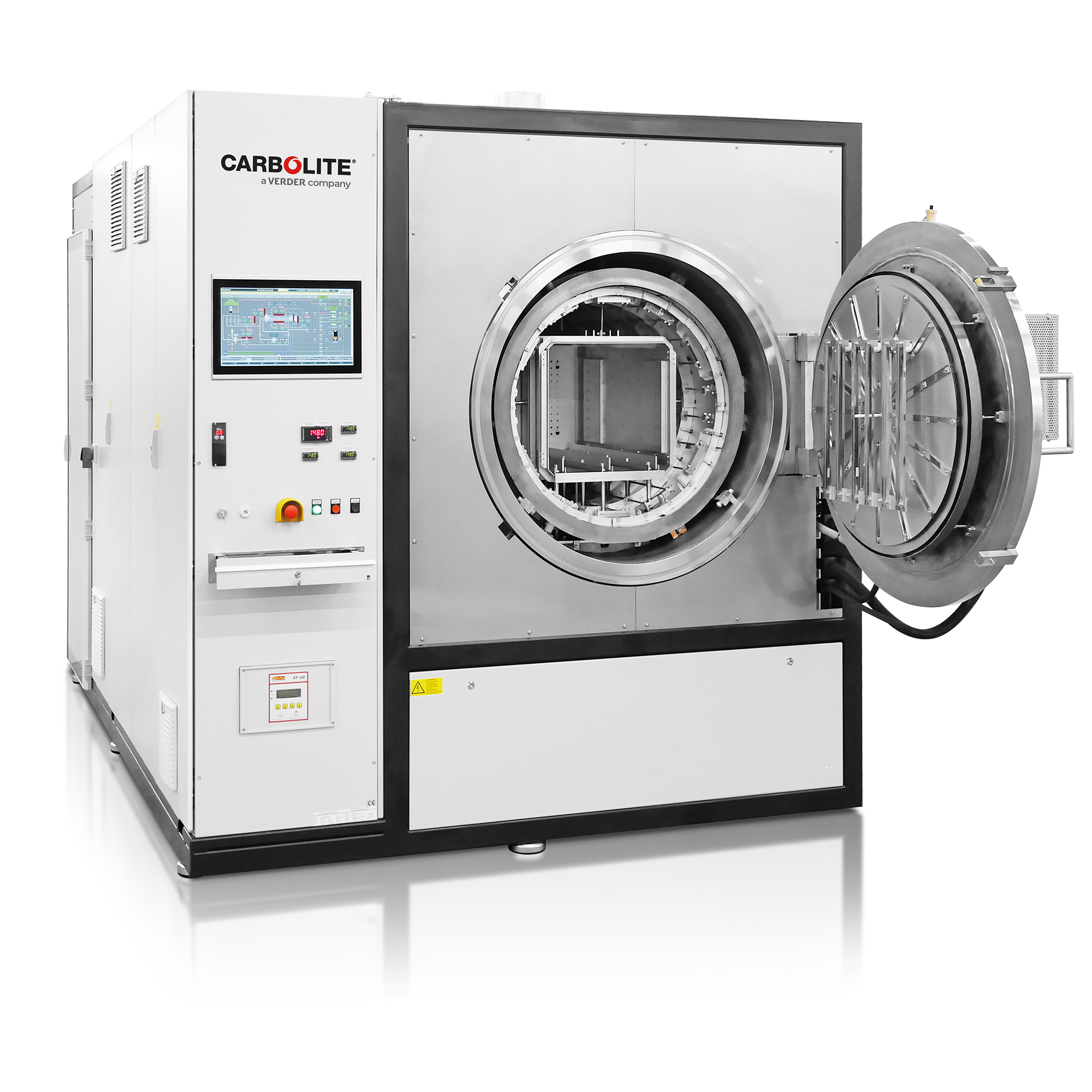
The V-L furnace is suitable for generating the lowest achievable operation pressures. Due to this vacuum capability, the highest purity gas atmosphere can be achieved.
Exemple de Aplicații
- Annealing, brazing, degassing, quenching, rapid prototyping, sintering, soldering, synthesis, tempering, stress relieving 3D printed additive manufactured parts
Benefits
- Stress relieving
- Argon, nitrogen, forming gas, high vacuum
- Oxygen levels <<30 ppm
- Precise temperature uniformity
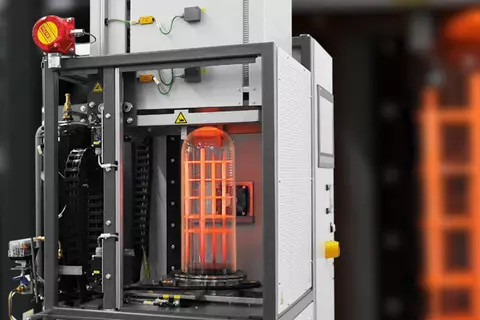
Video Produs: V-L - Top Hat Furnace
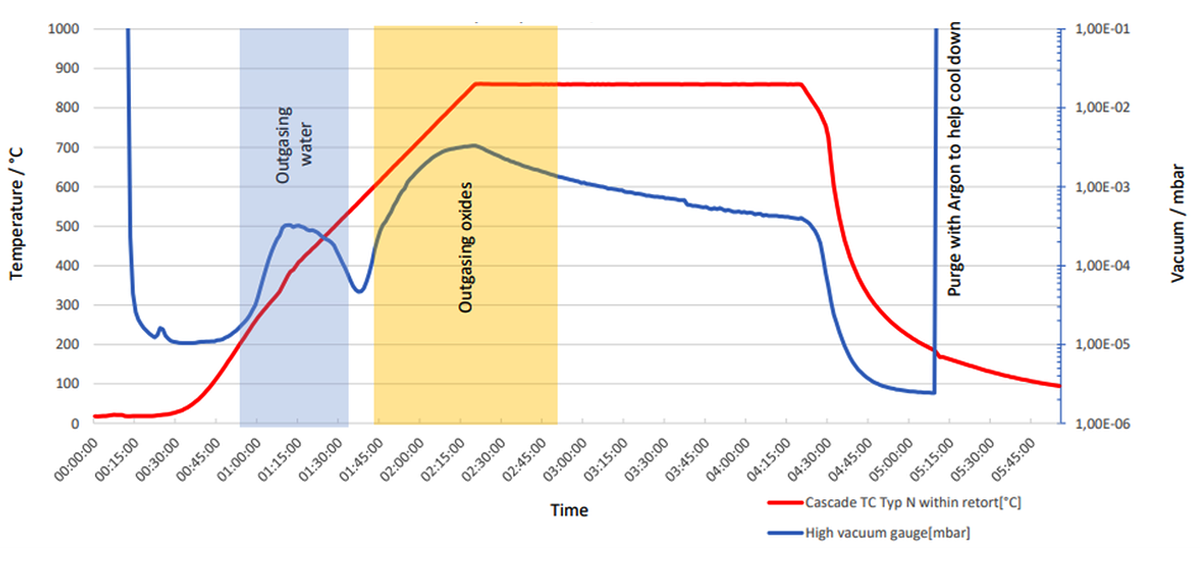
Typical heat treatment process:
High vacuum heat treatment of titanium alloy for stress relieving after laser-3D-printing with turbo pump 1200 L/s
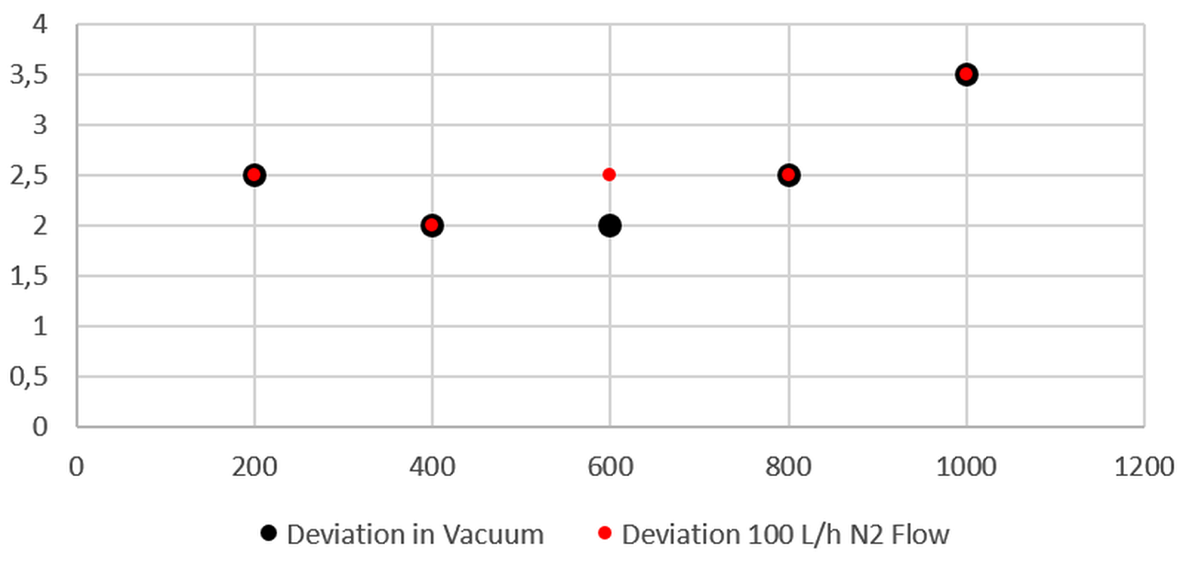
V-L 180-300
Temperature Deviation in +-°C
X-axis: Temperature in °C
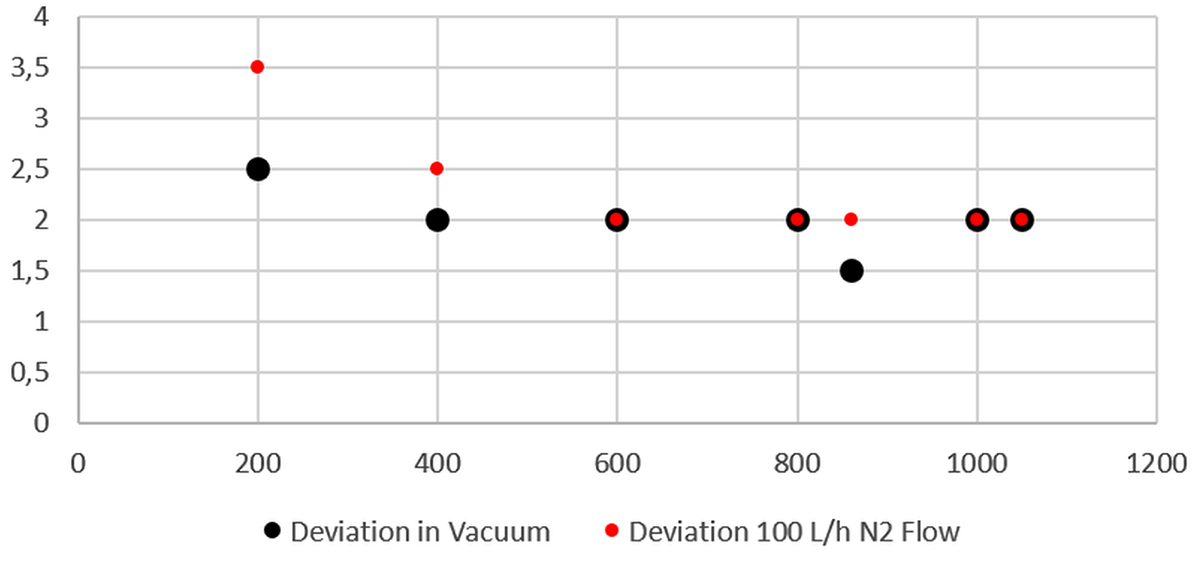
V-L 450-600
Temperature Deviation in +-°C
X-axis: Temperature in °C
Debinding & Sintering Furnaces for indirect additive methods
Glo 8 Litre - Entry-Level Furnace
With the GLO 8/13 Carbolite provides a small versatile furnace for Additive Manufacturing. The furnace features rotationally symmetrical heating elements that surround a cylindrical retort, ensuring uniform heating along the entire length. The furnace can be operated either with nitrogen, argon or forming gas (N2/H2 95/5 % or Ar/H2 98/2 %).
Exemple de Aplicații
- Thermal debinding, sintering, pyrolysis, synthesis, annealing, tempering
Benefits
- Up to 1300 °C
- ∅ 180 mm
- Gas tight
- Robust and reliable
HTK 8 to 120 litre - Advanced furnaces
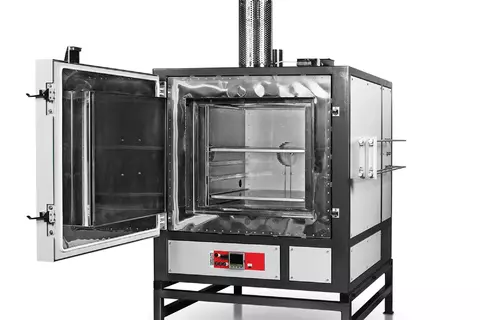
The high temperature furnace range HTK of Carbolite consists of several metallic heated furnaces made of molybdenum and tungsten.
These furnaces can be operated up to 2200 °C with hydrogen, nitrogen and argon, or even in vacuum, depending on the customer's requirements. The concentration of the gases is freely adjustable.
The HTK 8 and HTK 25 chamber furnaces are widely used for indirect Additive Manufacturing applications. The usable space, precise temperature control and uniformity are beneficial characteristics for indirect Additive Manufacturing processes.
Exemple de Aplicații
- Thermal debinding, sintering, pyrolysis, synthesis, annealing, tempering
Benefits
- Up to 2200 °C
- 8 to 320 litres volume
- Fine or high vacuum
- Suitable for all materials
Materiale video
Video Produs: GPCMA - Cuptor cu atmosferă controlată
Video Produs: V-L - Top Hat Furnace
Video Produs: HTMA - Etuve cu atmosferă controlată
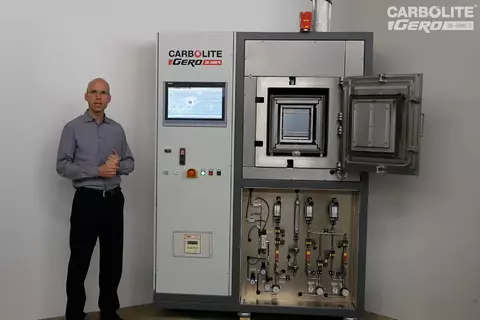
Video Produs: HTK - Cuptor cu cameră, izolație metalică
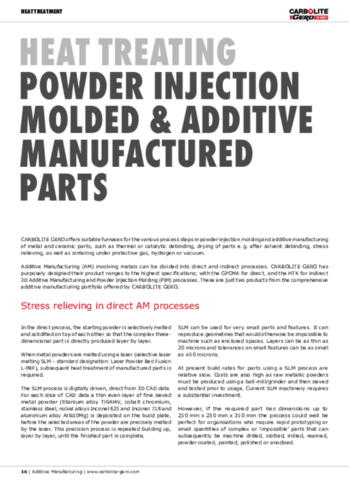
Heat Treating Powder Injection Molded & Additive Manufactured Parts
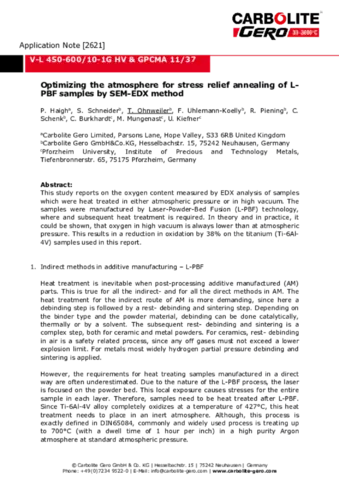
CARBOLITE GERO offers suitable furnaces for the various process steps in powder injection molding and additive manufacturing of metal and ceramic parts, such as thermal or catalytic debinding, drying of parts e. g. after solvent debinding, stress relieving, as well as sintering under protective gas, hydrogen or vacuum. Additive Manufacturing (AM) involving metals can be divided into direct and indirect processes. CARBOLITE GERO has purposely designed their product ranges to the highest specifications; with the GPCMA for direct, and the HTK for indirect 3D Additive Manufacturing and Powder Injection Molding (PIM) processes. These are just two products from the comprehensive additive manufacturing portfolio offered by CARBOLITE GERO.
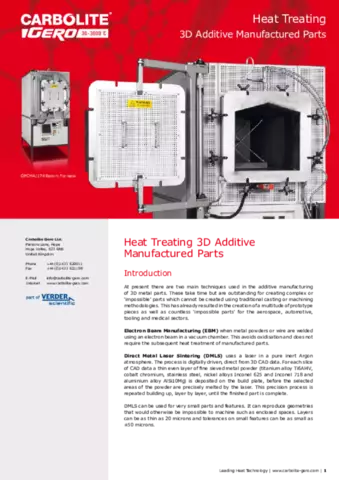
Heat Treating 3D Additive Manufactured Parts
At present, there are two main techniques used in the additive manufacturing of 3D metal parts, Electron Beam Manufacturing (EBM) and Direct Metal Laser Sintering (DMLS). These take time but are outstanding for creating complex or ‘impossible’ parts which cannot be created using traditional casting or machining methodologies. This has already resulted in the creation of a multitude of prototype pieces as well as countless ‘impossible parts’ for the aerospace, automotive, tooling and medical sectors.
Contact us for a free consultation
Carbolite products and services are available via a global network of daughter companies and fully trained distributors. Our staff will be happy to assist with any inquiry you might have.
Contact us for a free consultation and talk to a product specialist to find the most suitable solution for your application needs!