






Carbolite produce o gamă de etuve industriale pentru procesarea în șarje. Aceste modele sunt disponibile pentru temperaturi de până la 700 °C și volume de până la peste 13.000 de litri, satisfăcând cerințele clienților pentru diferite aplicații industriale.
Designul este caracterizat de o construcție robustă cu materiale durabile, ceea ce face ca această gamă să fie ideală pentru aplicații industriale. Fiecare etuvă industrială poate fi construită și furnizată cu o gamă largă de opțiuni, inclusiv protecție la supra-temperatură, mecanisme de încărcare și manipulare sau sisteme avansate de control al temperaturii.
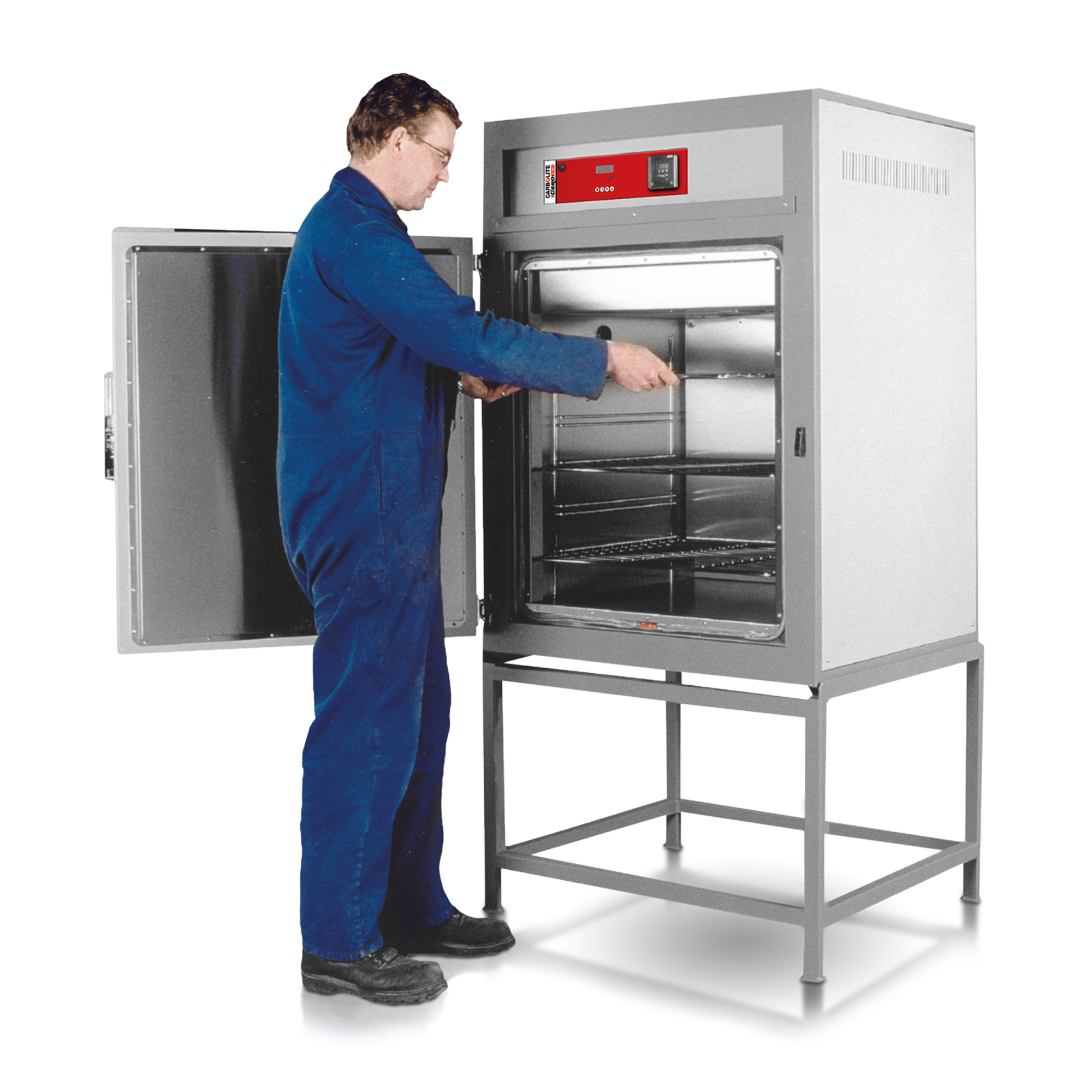
- Temperatura maximă: 300 °C
- Volum: de la 220 până la 450 litri
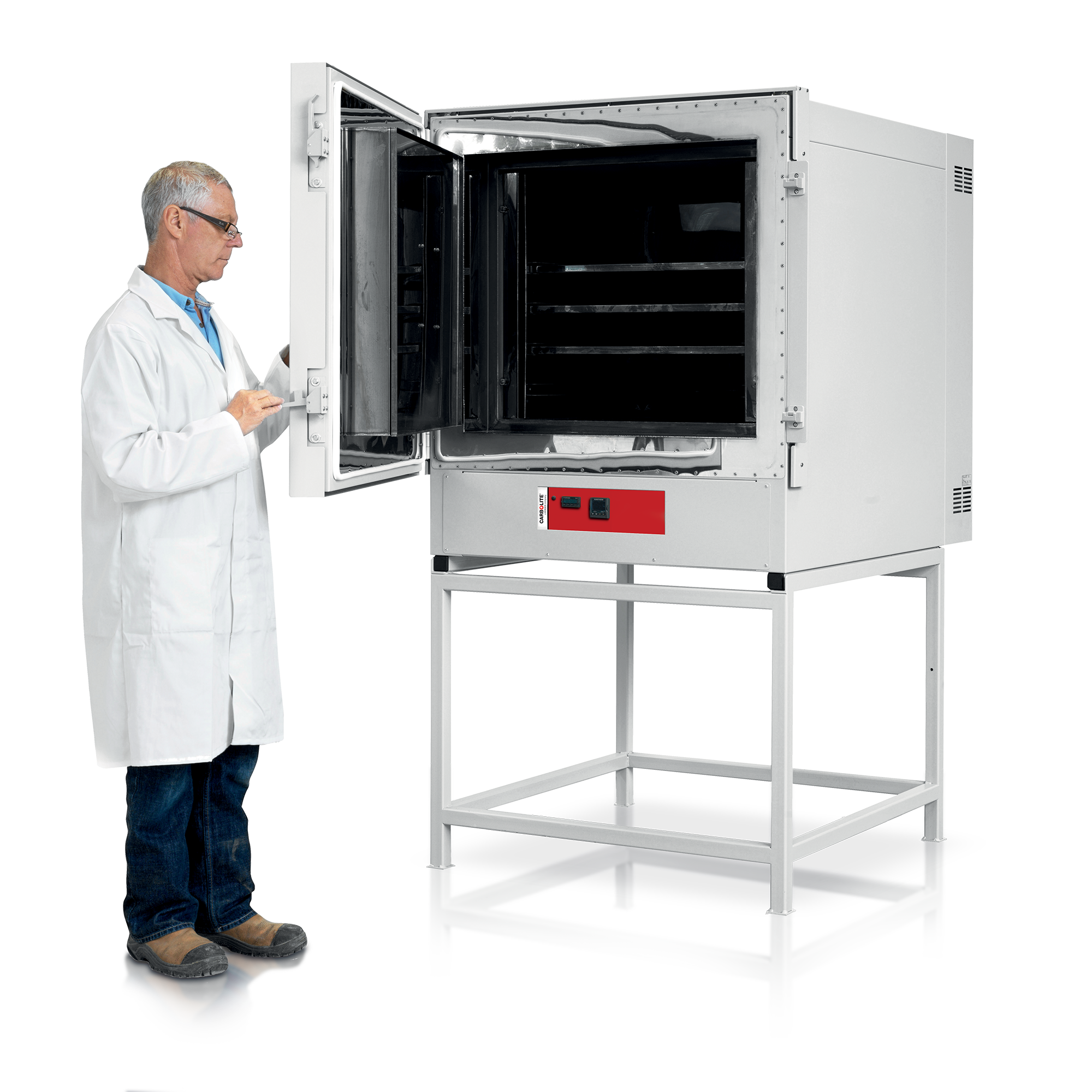
- Temperatura maximă: 400 - 700 °C
- Volum: 95 până la 343 litri
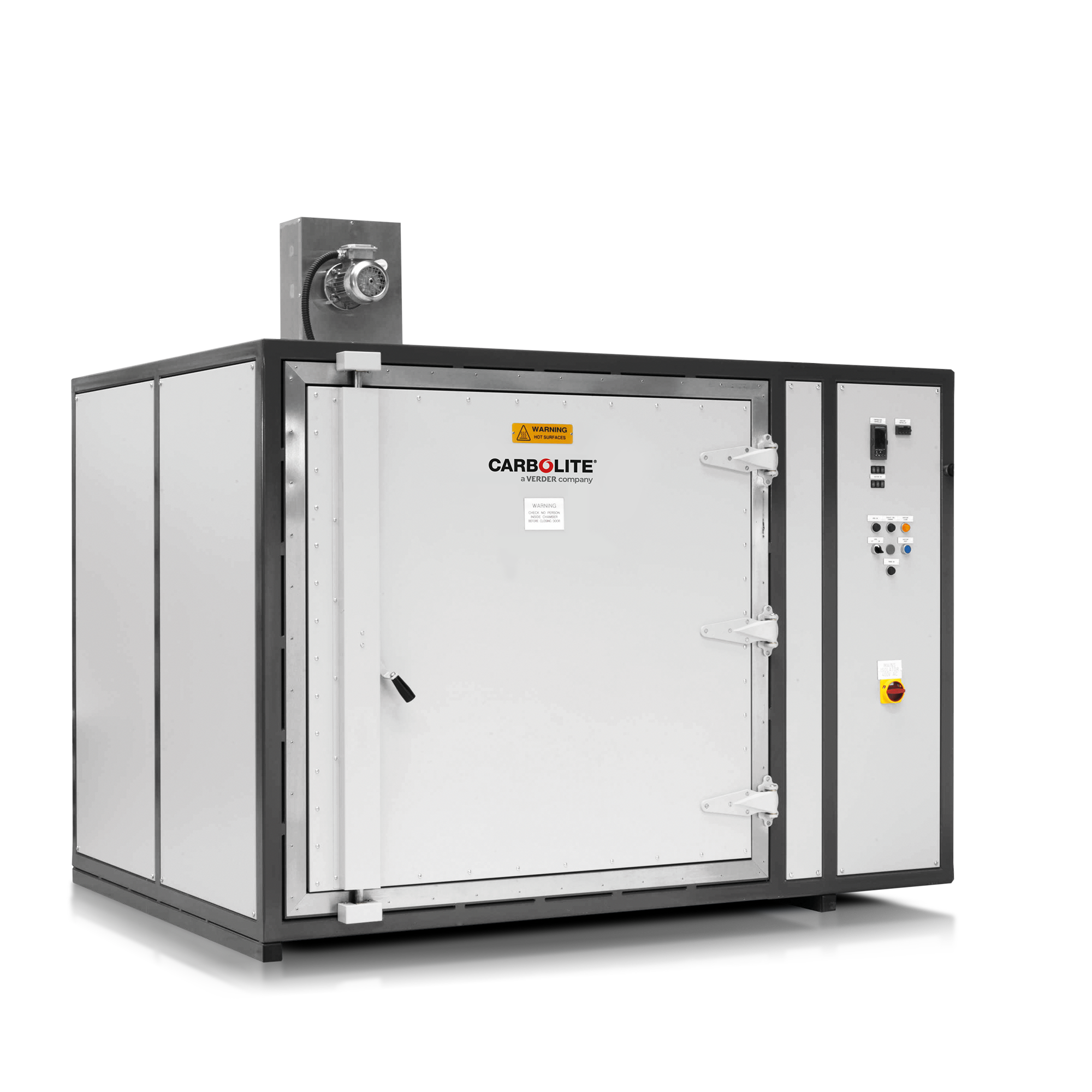
- Temperatura maximă: 425 - 600 °C
- Volum: 500 până la 1750 de litri
Detalii cuptor industrial
Aplicațiile tipice ale cuptoarelor noastre industriale includ componente pentru uscare, coacere sau întărire. Pe lângă aceste aplicații, toate cuptoarele industriale pe care le oferim pot fi personalizate la un nivel ridicat și, prin urmare, sunt capabile să îndeplinească pe deplin cerințele exigente ale multor industrii diferite. Pentru aplicații precum tratamentul termic AMS 2750G sub Nadcap, cuptorul nostru industrial de uz general, cuptorul industrial de înaltă temperatură și cuptorul industrial de uz general de mari dimensiuni pot fi modificate în etapa de comandă pentru a include sisteme sofisticate de control și înregistrare a datelor. Cuptorul nostru industrial cu răcire rapidă este perfect pentru aplicații de revenire și recoacere, inclusiv, dar fără a se limita la, recoacerea dozimetrelor termoluminiscente. Controlerul programabil 3508P1 cu care este echipat acest cuptor industrial oferă un control precis asupra ratei de creștere sau scădere a temperaturii și a perioadei de timp în care o anumită temperatură este menținută.
Etuve industriale - FAQ
What is an industrial oven?
An industrial oven is a heating device that meets the precise temperature control and temperature uniformity requirements of a specific process. It is a common piece of equipment used in a production environment where the heating of materials is required. Depending on the application, industrial ovens vary in size and volume as well the maximum temperature they can reach. Industrial ovens can be manufactured to comply with industry standards such as NADCAP AMS2750H and CQI-9.
What is the difference between a laboratory and an industrial oven?
In principle, the difference between a laboratory oven and industrial oven is the size. Industrial ovens tend to process larger batches of material, whereas laboratory ovens are typically used to process smaller samples. Industrial ovens have a more robust construction in order to withstand the demands of production facilities.
How does an industrial oven work?
An industrial oven works by heating the air containing with the oven chamber using electrically operated heating elements. The air is usually mixed by using a circulation fan mounted within the heated chamber to ensure uniform heat distribution, often known as 'forced convection'. Parts placed inside the chamber are heated by the hot air.
What is the temperature range of an industrial oven?
The typical operating temperature of an industrial oven is entirely dependent on the application requirements. Carbolite supplies ovens with maximum temperatures ranging up to 300°C for applications such as drying and moisture extraction, and ovens for applications such as annealing and sintering that can require temperatures up to 600 or 700°C.
What is the benefit of an electrical industrial oven over a gas oven?
The primary benefits of an electrical industrial oven over a gas oven are cleanliness and accuracy of temperature control. Electrical heating is very clean because there are no 'products of combustion' contaminating the chamber. Electrical heating achieves very precise temperature control because the power to the heating elements can be controlled very quickly and accurately.
How expensive is an industrial oven to run?
The cost of running an industrial oven is primarily dependent on the operating temperature and size of the chamber. Energy efficient industrial ovens are well insulated and the power consumption can be easily calculated. If the process requires significant air changes, for example to remove potentially explosive solvents, then the running costs will be higher.