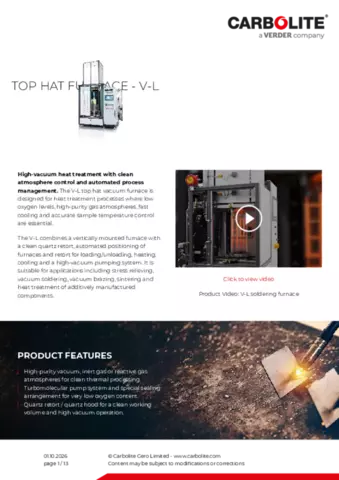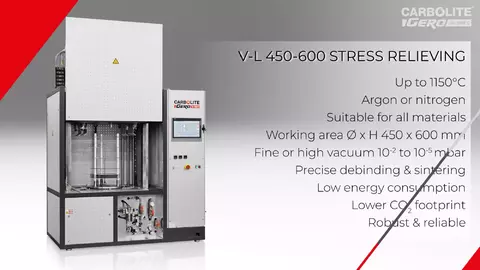





High-vacuum heat treatment with clean atmosphere control and automated process management. The V-L top hat vacuum furnace is designed for heat treatment processes where low oxygen levels, high-purity gas atmospheres, fast cooling and accurate sample temperature control are essential.
The V-L combines a vertically mounted furnace with a clean quartz retort, automated positioning of furnaces and retort for loading/unloading, heating, cooling and a high-vacuum pumping system. It is suitable for applications including stress relieving, vacuum soldering, vacuum brazing, sintering and heat treatment of additively manufactured components.
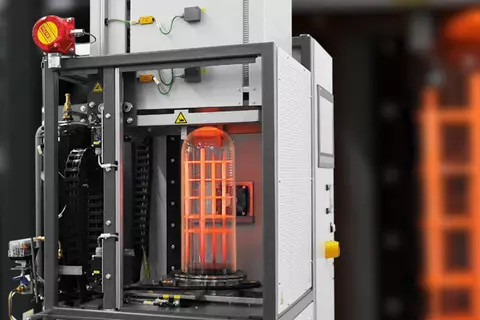
Product Video: V-L Soldering Furnaces

Product Features
- High-purity vacuum, inert gas or reactive gas atmospheres for clean thermal processing.
- Turbomolecular pump system and special sealing arrangement for very low oxygen content.
- Quartz retort / quartz hood for a clean working volume and high vacuum operation.
- Precise temperature control with sample thermocouple and cascade control options.
- Automatic control, recipe management, batch data recording and remote access options.
- Fast cooling by lifting the furnace and using forced air around the quartz retort.
How the V-L top hat vacuum furnace works
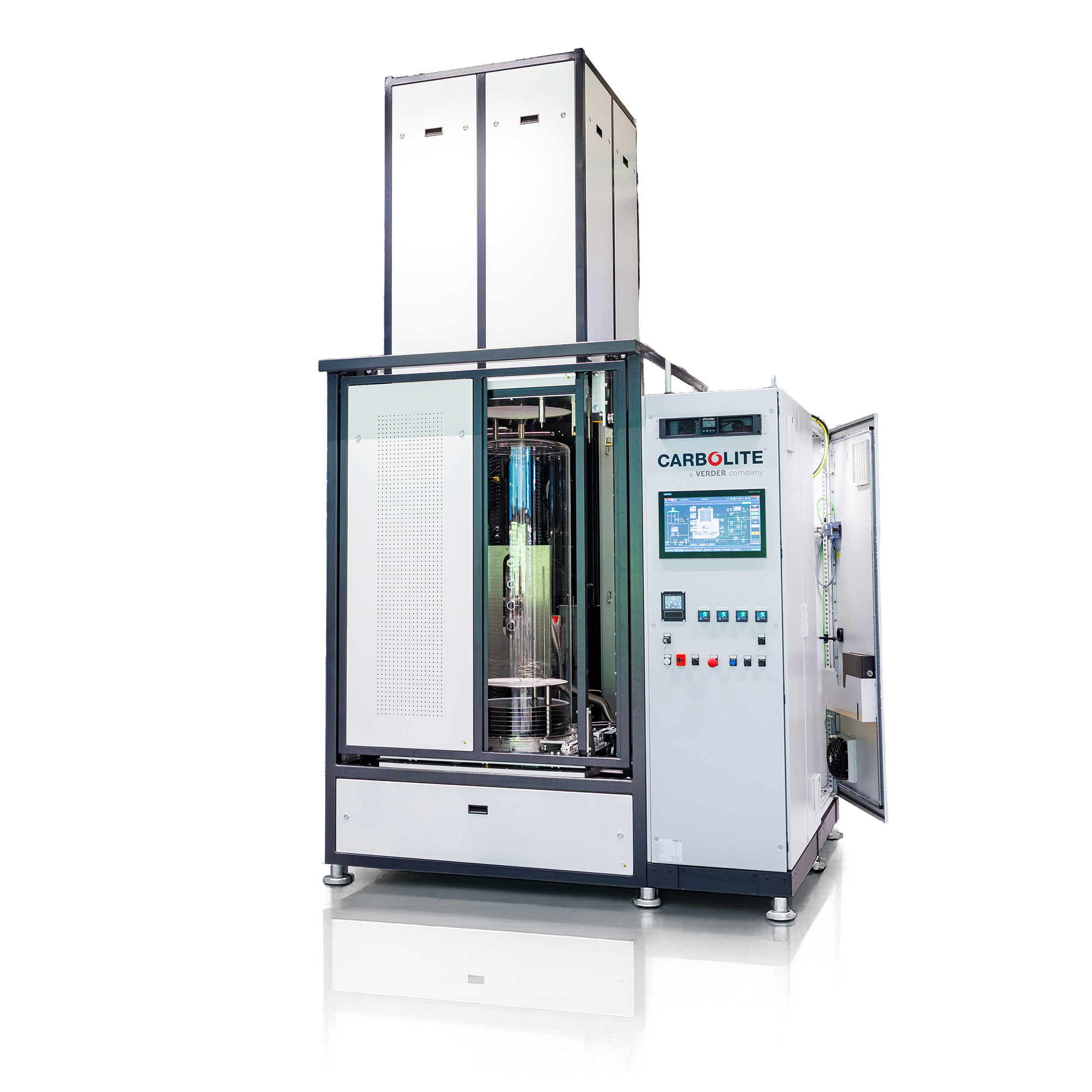
The V-L is a vertically mounted tube furnace with automated furnace movement, enabling controlled loading and unloading, heating, and cooling processes. The quartz retort is connected to the furnace system so that the sample area can be accessed easily during loading. For the heat treatment process, the retort and furnace assembly are lowered and locked into position, allowing high-vacuum or controlled-atmosphere operation.
After heating, the furnace can be raised away from the quartz retort to support rapid cooling of the specimen in vacuum, air or an inert gas atmosphere. This top-hat design gives users improved access to the sample space, supports clean heat treatment and helps reduce process cycle times.
The furnace uses durable CrFeAl heating elements and high-performance ceramic fibre insulation. Three independently controlled heating zones deliver excellent temperature uniformity. The zones are monitored by mantle thermocouples, with an additional over-temperature thermocouple for process safety. A sealed ceramic fibre plug closes the top of the furnace hearth to maintain thermal stability during operation.
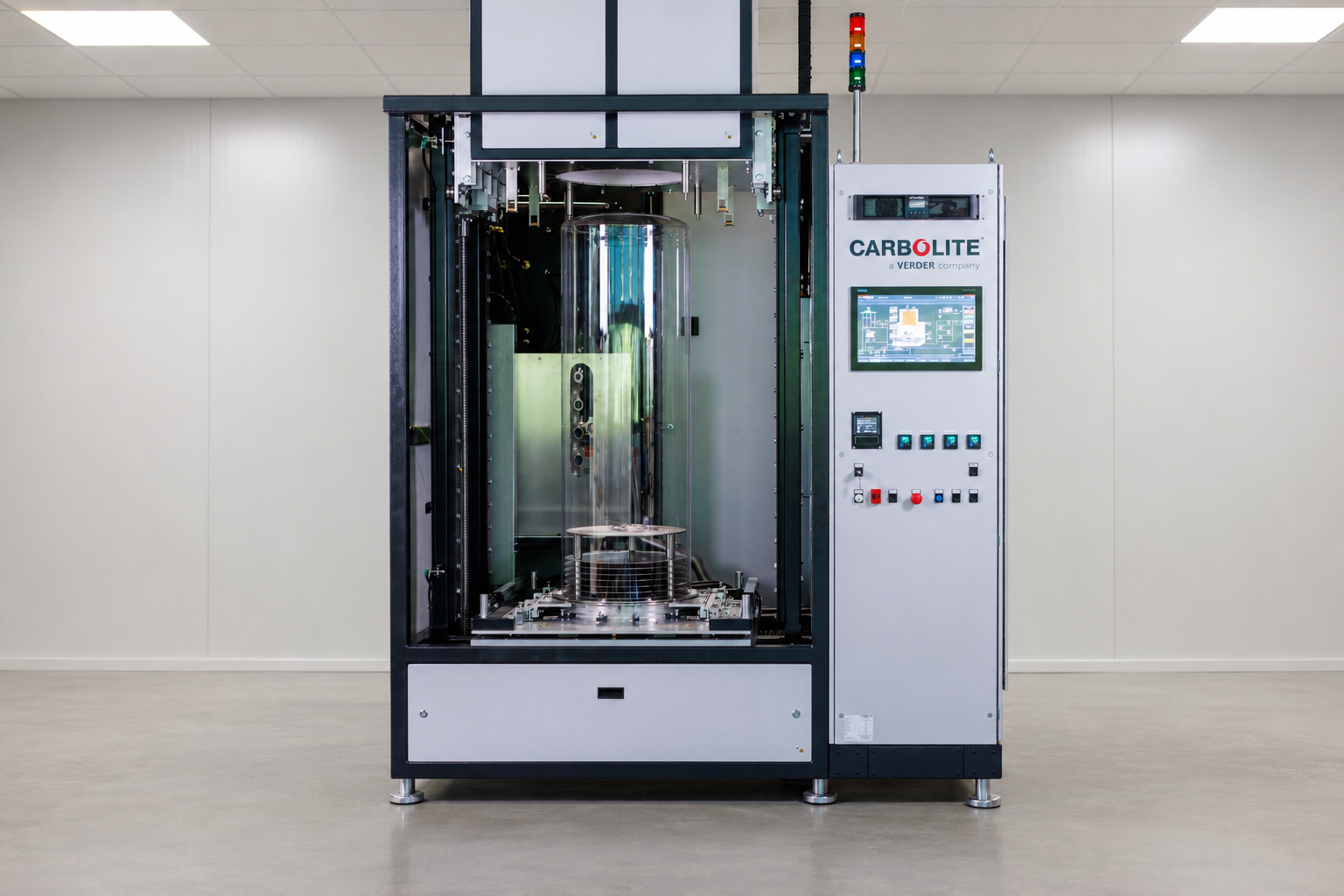
Vacuum Furnace V-L 450-1100 Enhancements
- Increased 1100 mm glass dome height for greater capacity and process flexibility.
- Redesigned dual-spindle lifting system for smoother, more stable operation.
- Rear-access servicing for faster and safer maintenance.
- Sliding glass dome for easier inspection and handling.
- Optimised loading height for improved operator ergonomics.
Clean atmosphere and low-oxygen heat treatment
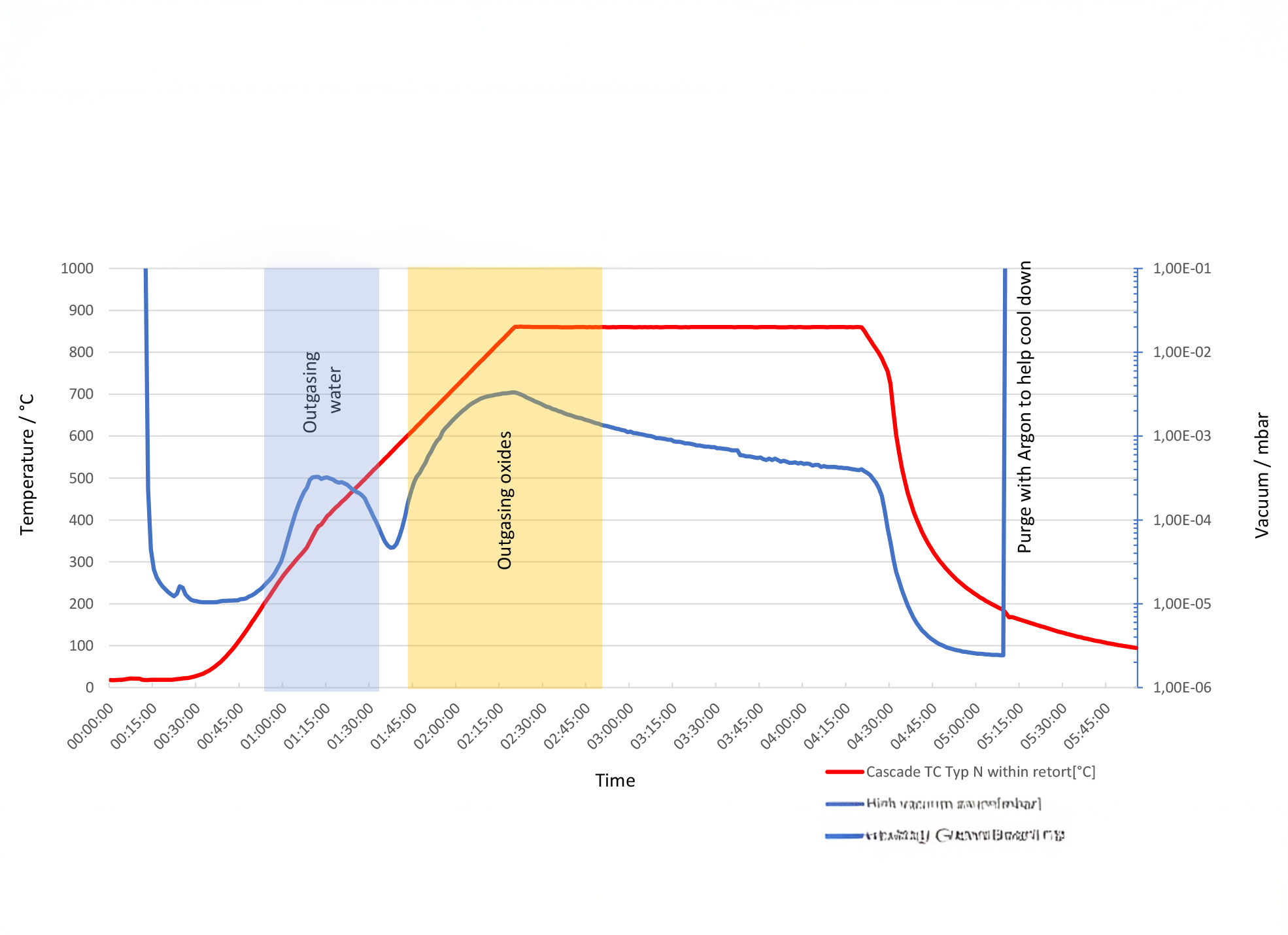
The V-L is designed for processes where residual oxygen and surface oxidation must be minimised. When titanium and titanium alloys are heated in vacuum or inert gas, they can remain highly reactive to residual oxygen. High vacuum helps release surface water and oxides from the metal, reducing the oxygen available for oxidation during heat treatment.
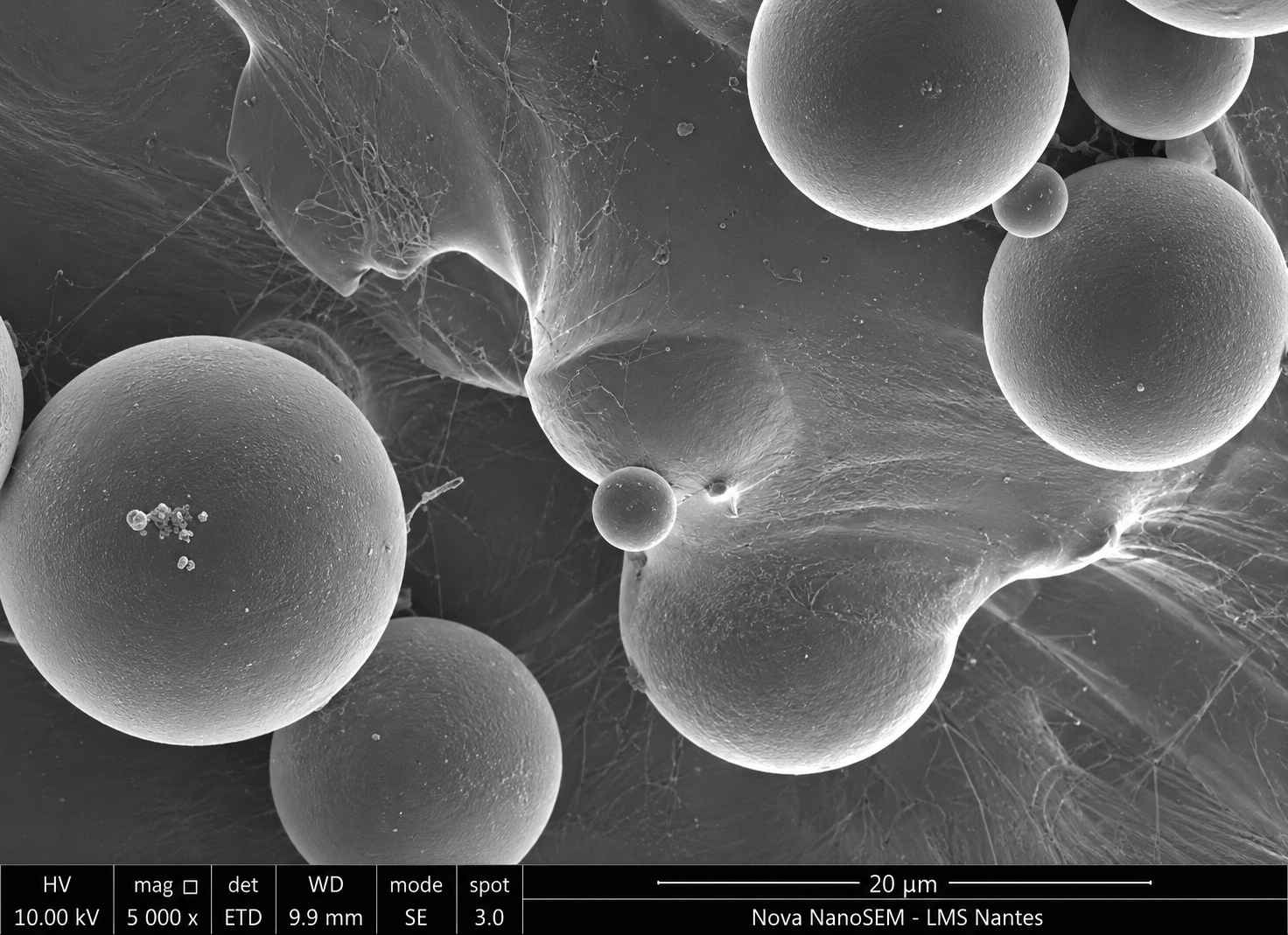
In a reported Carbolite study, oxygen concentration was measured by EDX analysis on Ti-6Al-4V samples produced by laser powder bed fusion and subsequently heat treated. The high-vacuum process reduced oxidation by 38% compared with heat treatment at atmospheric pressure for the samples tested. This makes the V-L a strong option for clean stress relief annealing and heat treatment of additively manufactured parts.
The pressure profile also shows how the process atmosphere changes during heating: water outgassing is most visible between approximately 200 °C and 500 °C, while metal monoxide outgassing occurs between approximately 600 °C and 850 °C. After heat treatment, the turbomolecular pump stabilises the pressure as desorption processes decrease at lower temperatures.
Fast cooling for shorter process cycles
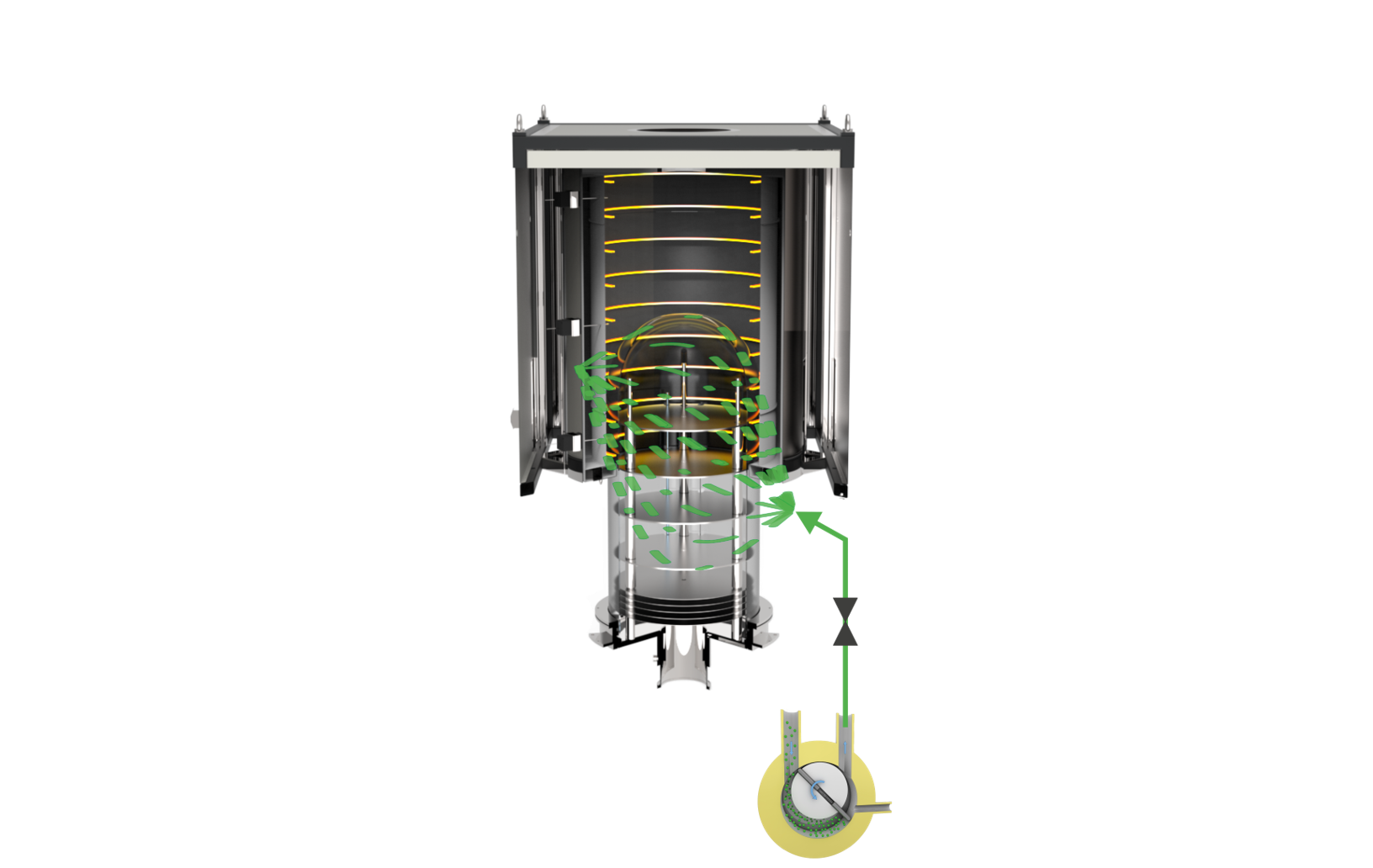
For forced cooling, the V-L can lift the furnace and blow room-temperature air around the quartz hood. This simple and efficient cooling method enables faster cycle times and rapid temperature reduction after vacuum soldering, vacuum brazing and other heat treatment processes.
A motorised flap on the top of the V-L can create a chimney effect, helping cool the complete system once the heating elements are switched off. This gives operators an effective way to cool the retort and prepare the furnace for the next run.
Automatic control system
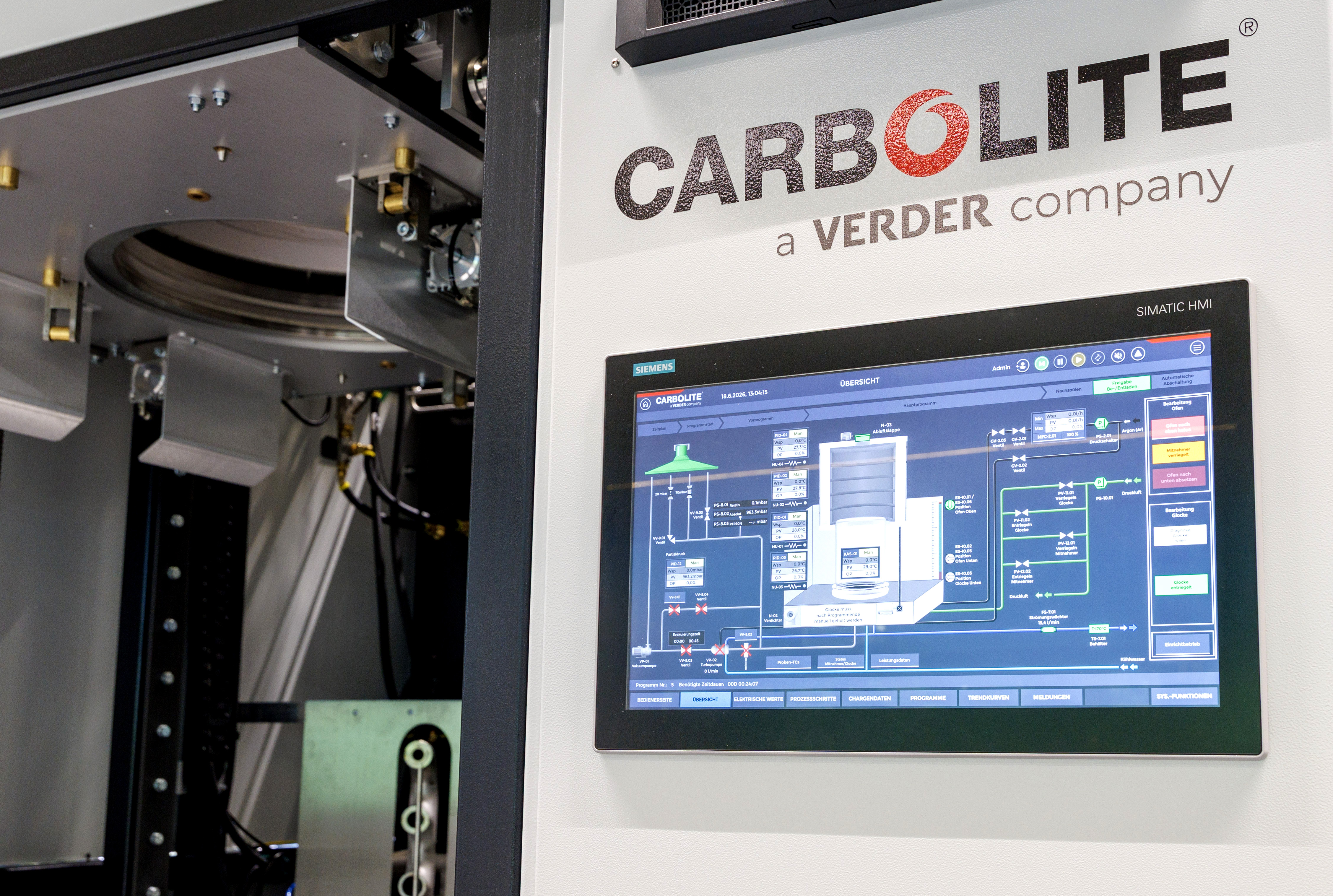
The V-L is operated through a fully programmable control system with an intuitive touch panel interface (19 inch, 1280 x 800 pixel display). Operators can monitor temperature profiles, vacuum conditions, gas flow and process values, while quality teams benefit from data logging and batch records for every furnace run.
Applications
The V-L vacuum furnace supports a wide range of high-vacuum and controlled-atmosphere heat treatment applications.
| Application group | Example processes |
|---|---|
| Additive manufacturing and powder metallurgy | Stress relieving, annealing of L-PBF samples, sintering, MIM and rapid prototyping. |
| Joining and metallurgical processing | Vacuum soldering, vacuum brazing, tempering, annealing and rapid cooling. |
| Clean processing and materials preparation | Degassing, drying, sublimation and synthesis. |
Need a clean high-vacuum furnace for controlled atmosphere heat treatment? Speak to Carbolite about the V-L top hat vacuum furnace, process configuration, atmosphere requirements and model-specific technical data for your application:

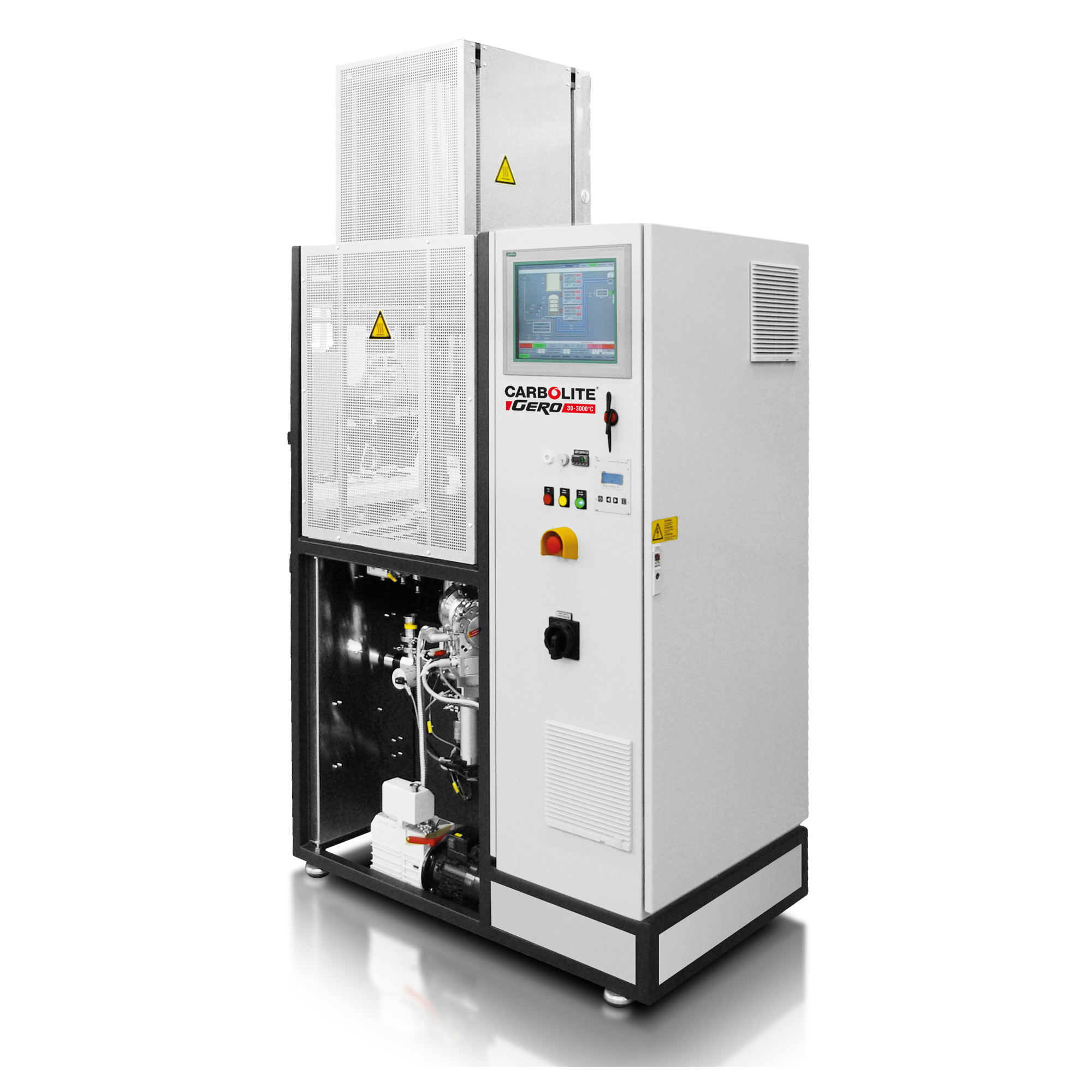
Top hat furnace - V-L Examples

Top hat furnace - V-L- FAQ
What is a V-L top hat vacuum furnace?
The V-L is a vertically mounted top hat vacuum furnace with a clean quartz retort, movable furnace cover and automated process controls for high-vacuum or controlled-atmosphere heat treatment.
Which processes is the V-L suitable for?
Typical applications include stress relieving, vacuum soldering, vacuum brazing, degassing, sintering, annealing, tempering, drying and heat treatment of additively manufactured parts.
How does the V-L help reduce oxidation?
The turbomolecular pump system and controlled atmosphere reduce residual oxygen. In the study, high-vacuum heat treatment produced a reported 38% reduction in oxidation for Ti-6Al-4V L-PBF samples compared with atmospheric pressure heat treatment.
How are samples loaded?
The V-L top hat design provides open access to the sample area. Samples can be positioned from multiple sides, and flexible rack systems can be adjusted for different sample heights.
How is process quality documented?
The automatic control system stores setpoints and process values such as temperature, gas flow, pressure and errors in CSV format, with automatic and manual batch file saving for each furnace run.
How does fast cooling work?
The furnace can be lifted so room-temperature air flows around the quartz hood. A motorised flap can create a chimney effect to cool the system after the heating elements are turned off.
Top hat furnace - V-L Technical Data
| Dimensions: External H x W x D (mm) | Volume (l) | Ø x H (mm) | Tmax vacuum (°C) | Max. loading capacity (kg) | Max. temp in vacuum (°C) | Power (kW) | Weight (kg) | Automatic operation | |
|---|---|---|---|---|---|---|---|---|---|
| V-L 180-300 | 3000 x 1400 x 1400 | 7.5 | 180 x 300 | 1050 | 10 | 1050 | approx. 15 | approx. 950 | Siemens SPS |
| V-L 300-400 | 2850 x 2100 x 1400 | 28 | 300 x 400 | 1050 | 30 | 1050 | approx. 30 | approx. 1650 | Siemens SPS |
| V-L 450-600 | 3400 x 2200 x 1400 | 95 | 450x600 | 1050 | 100 | 1050 | approx. 60 | approx. 1500 | Siemens SPS |
| V-L 450-1100 | 4200 x 2200 x 1850 | 170 | 450 x 1100 | 1050 | 100 | 1050 | approx. 100 | approx. 2700 | Siemens SPS |