




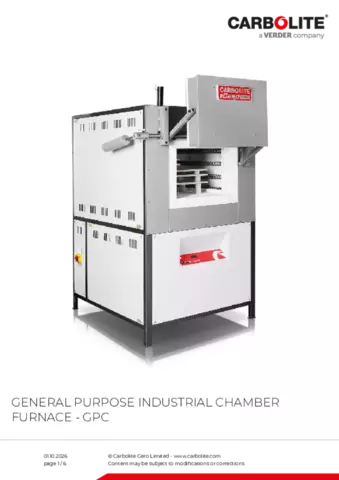
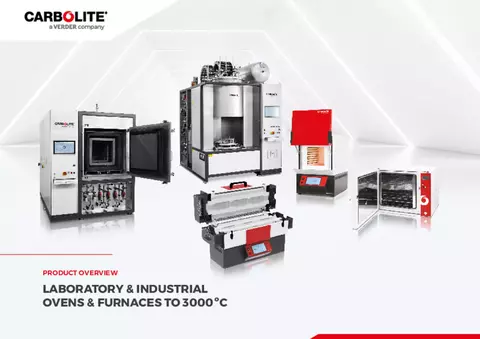
The GPC general purpose chamber furnaces are large floor-standing models. Available at 1200 °C and 1300 °C with capacities ranging from 131 to 400 litres.
Standard features
- 1200°C or 1300°C maximum operating temperature
- 131, 200, 225, 300, 350 or 400 litre chamber volumes
- Programmable EPC3016P1 controller
- Over-temperature protection
- Free radiating coiled wire elements on two sides and roof
- All models have under hearth heating
- Low thermal mass insulation for high energy efficiency
- Vertical lift door keeps heated surface away from the user
- Hard wearing refractory hearth plate resists damage & supports heavier loads
- Heating elements are easily serviced
- Ethernet communications
Options (specify these at time of order)
- A range of sophisticated digital controllers, multisegment programmers and data loggers with digital communication options is available - more information about controllers
- A range of metallic retorts to work with modified atmospheres up to 1100°C
- Bespoke specifications are available for AMS2750F (Nadcap) compliant applications
- Various loading and unloading management options can be supplied
General Purpose Industrial Chamber Furnace - GPC Technical Data
| Max temp (°C) | Max continuous operating temp (°C) | Heat-up time (mins) | Dimensions: Internal H x W x D (mm) | Dimensions: External H x W x D (mm) H (door open) | Volume (litres) | Max power (W) | Thermocouple type | Weight (kg) | |
|---|---|---|---|---|---|---|---|---|---|
| GPC 12/131B | 1200 | 1100 | 150 | 350 x 500 x 750 | 1860 x 1260 x 1230 (1860) | 131 | 24000 | R | 400 |
| GPC 12/400B | 1200 | 1100 | 150 | 675 x 650 x 900 | 2200 x 1410 x 1380 | 400 | 39000 | R | 670 |
| GPC 13/131B | 1300 | 1200 | -- | 350 x 500 x 750 | 1860 x 1260 x 1280 (1860) | 131 | 24000 | R | 400 |
| GPC 13/400B | 1300 | 1200 | 150 | 675 x 650 x 900 | 2200 x 1410 x 1380 | 400 | 39000 | R | 670 |
General Purpose Industrial Chamber Furnace - GPC Downloads
Heat Treating 3D Additive Manufactured Parts
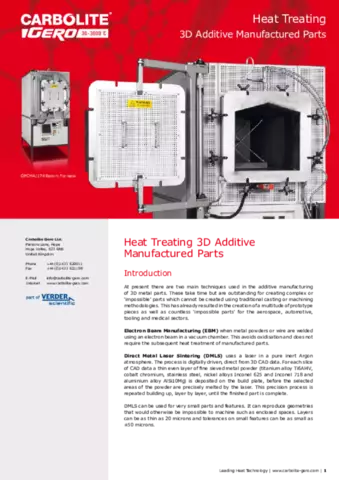
At present, there are two main techniques used in the additive manufacturing of 3D metal parts, Electron Beam Manufacturing (EBM) and Direct Metal Laser Sintering (DMLS). These take time but are outstanding for creating complex or ‘impossible’ parts which cannot be created using traditional casting or machining methodologies. This has already resulted in the creation of a multitude of prototype pieces as well as countless ‘impossible parts’ for the aerospace, automotive, tooling and medical sectors.