





Liquid Silicon Infiltration is an important process in the manufacture of modern ceramic matrix carbon fiber reinforced composites. These composites have superior material properties, such as high thermal stability, high thermal conductivity, low density and high abrasion resistance.
Due to their properties, C/C – SiC composites are therefore the material of choice in highly oxidizing atmospheres and very high temperatures. The material is used, for example, in jet vanes for missile rockets, brake pads for sport cars, bullet proof vests and nose caps for spacecrafts (reentry into earth atmosphere).
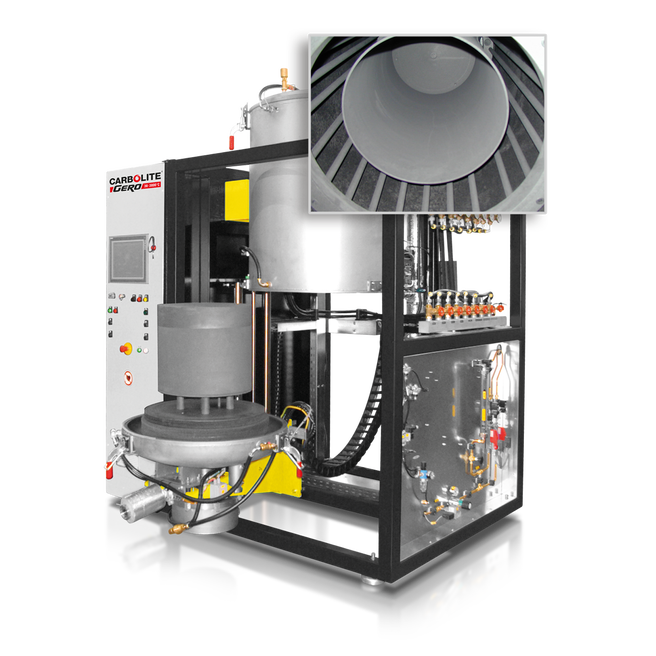
One major manufacturing process of these compounds is Liquid Silicon Infiltration, more accurately the liquid silicon infiltration (LSI) of porous C/C. Compared to other processes like chemical vapor infiltration, LSI is a cost efficient and quick manufacturing process, which may be carried out in Carbolite's HTBL GR vacuum furnace.
During heat treatment in the furnace, silicon is melted on top of the porous C/C material and diffuses into the pores of the material. This results in the reaction of the carbon matrix with silicon, which forms SiC and yields a dense material with C/C segments separated from each other by SiC.
The all-around accessibility of the HTBL furnace is very advantageous for this application. The automatic software control makes unattended operation possible and ensures a proper data logging.
A plant for Pyrolysis and Liquid Silicon Infiltration by Carbolite
A plant to carry out both, Pyrolysis and Liquid Silicon Infiltration built by Carbolite is shown on the right. The first unit is used for the pyrolysis process of carbon based material. This pyrolysis can be carried out in partial pressure mode. This means the total pressure inside the furnace is below atmospheric pressure. At the same time, inert gas is purged into the furnace.The typical debinding temperature is between 400°C and 600°C. In this temperature range, the binder evaporates by the combination of temperature and underpressure. A defined path towards the heated gas outlet sucks the binder out of the furnace into the vacuum pump. Hence, the vacuum pump is a special fresh oil pump, capable of pumping the binder. Finally, the binder is combusted in an active afterburner, driven by compressed air and propane gas.
The second HTBL type furnace is used for Liquid Silicon Infiltration itself. The melting point of the liquid silicon is 1414°C. The furnace is designed for operation up to 2000°C. Some pictures of the carbon material before and after Liquid Silicon Infiltration carried out during the factory acceptance test are shown below.
The HTBL for Liquid Silicon Infiltration is equipped with a pre vacuum pumping unit with a roots pump on top. The furnace is three zone heated for an improved temperature distribution inside the usable space.
Both furnaces were successfully installed in the production area of our customer.
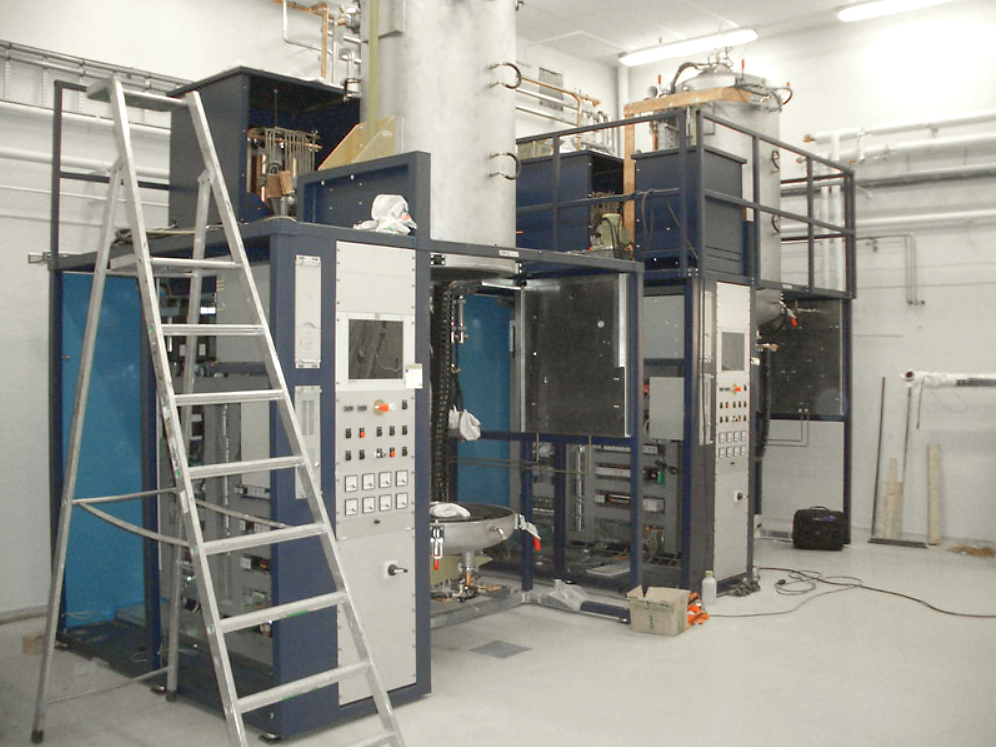
Twee HTBL 80 GR/22-1G ovens tijdens de installatie bij de klant. Een HTBL wordt gebruikt voor het pyrolyse proces. De andere HTBL wordt gebruikt voor de siliconisatie procedure.
Een wortel pompeenheid wordt gebruikt voor evacuatie naar het fijn vacuümbereik. Een speciale verse oliepomp wordt gebruikt om het debinding proces in gedeeltelijke druk uit te voeren. De pompeenheid is gemonteerd op een onafhankelijke drager.
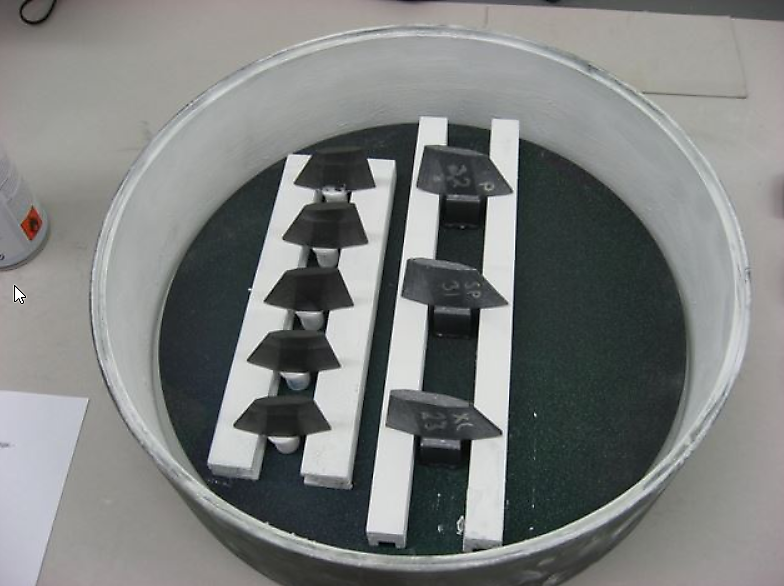
Vanen in oorspronkelijke positie voor siliconisatie: Vanen loodrecht op de grafietstaven. Grafietstaven parallel tegenover elkaar. Dezelfde smeltkroes na siliconisatie wordt in de volgende foto getoond.
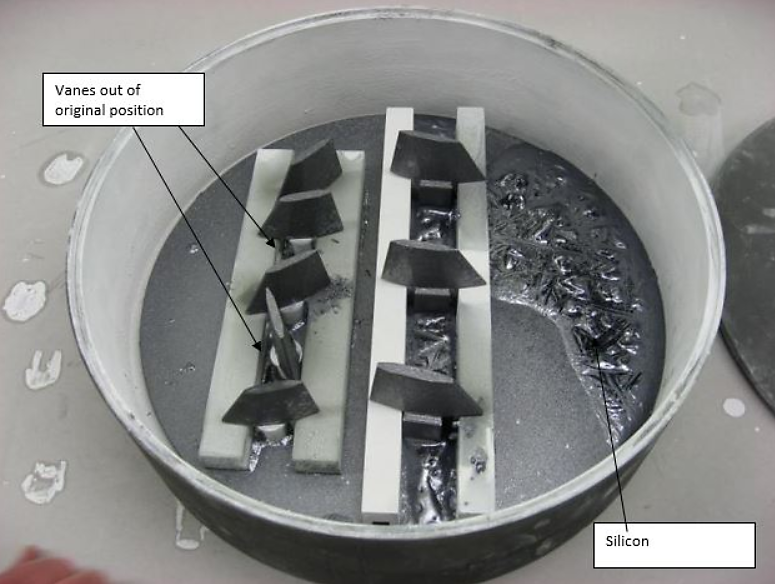
Dezelfde smeltkroes als in de vorige foto die na siliconisatie is genomen. Sommige schoepen zijn ook buiten de oorspronkelijke positie.
Contacteer ons voor een vrijblijvend advies
Carbolite products and services are available via a global network of daughter companies and fully trained distributors. Our staff will be happy to assist with any inquiry you might have.
Contact us for a free consultation and talk to a product specialist to find the most suitable solution for your application needs!